Return to Massingham
April 2026
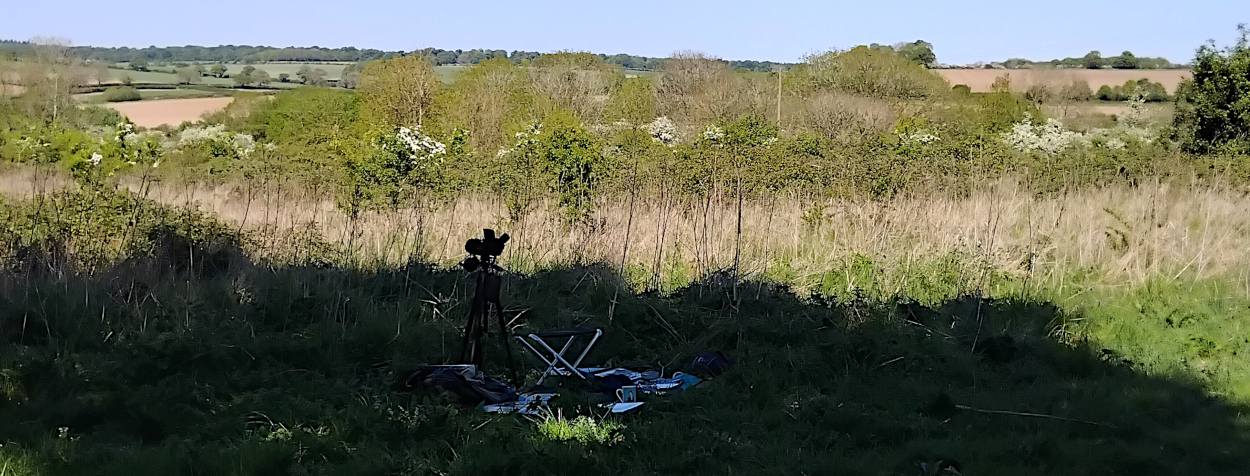 Drawing hoverflies by the old quarry at the northern end of the heath. May 2025
Just over a year ago I was one of an SWLA artist group exploring the creative opportunities presented by a re-wildling project on Massingham Heath in NW Norfolk. In late April this year I’m joining in with a different group on the heath
Over five years ago, Norfolk landowner Oliver Birkbeck embarked on an exciting re-wilding project on land that he inherited around the village of Great Massingham. Dating back to the Bronze Age the land was essentially lowland heath that during the Second World War mostly went under the plough and was lost as a unique wildlife habitat. Oliver increasingly recognised that the arable land created had poor yields but high input demands and in the late 2010’s a programme of re-wilding (not abandonment) began which has seen the restoration of large areas of flower rich grassland, heath and scrub. Half of the land at the 2,500-acre estate (1,000 hectares) is being rewilded to benefit nature, while half is used for conventional agriculture.
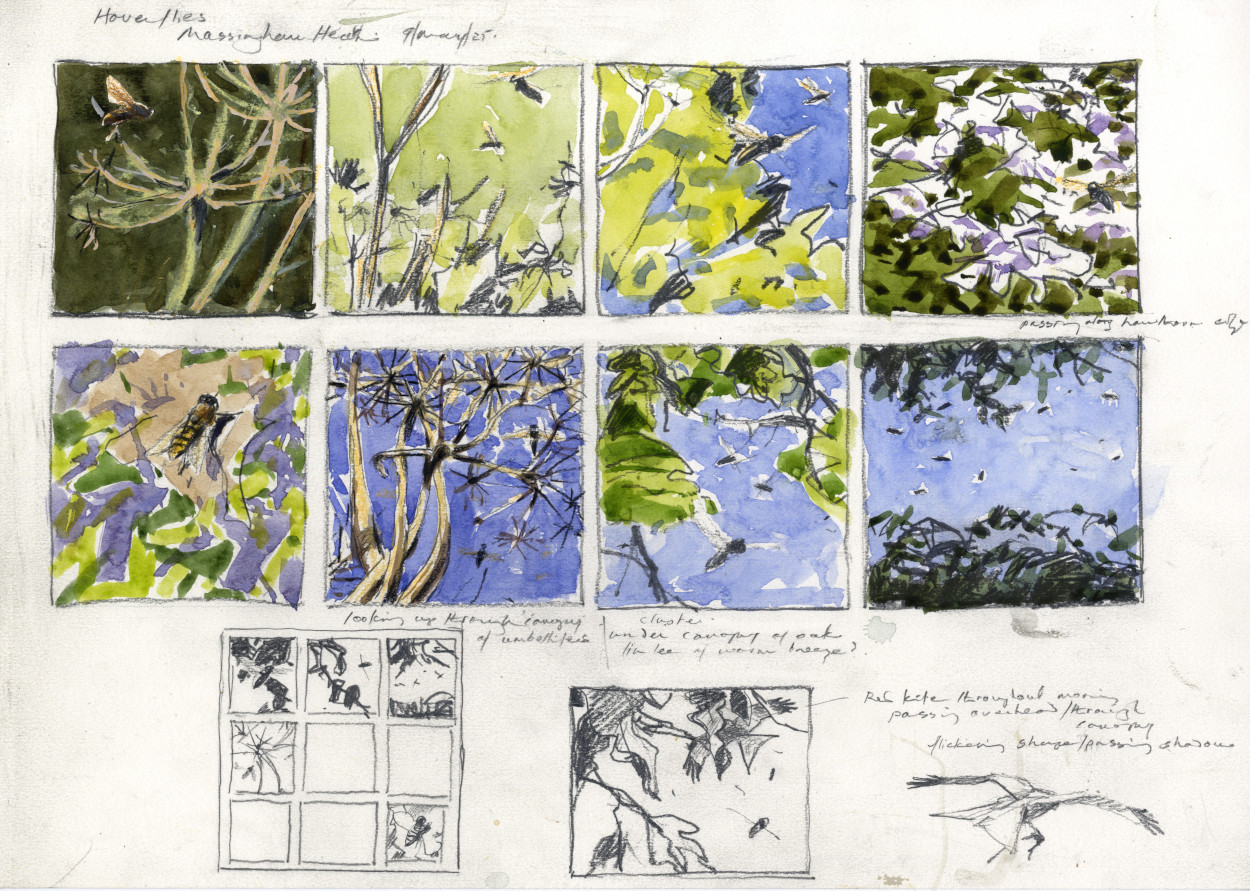
| razing animals such as Konik ponies, Bagot goats and Tamworth pigs now play an important part in a massive increase in biodiversity all over the estate. Massingham Heath is once again alive with a wide variety of vertebrate and invertebrate wildlife including birds, mammals, insects, reptiles and amphibians alongside a rich and diverse flora. Many of these plants and animals are scarce or threatened on a national scale. Tim Baldwin, naturalist and SWLA friends coordinator, has watched the restored habitat thrive over the seven years that he has lived in the village of Great Massingham. His observations have provided great insight into a range of heathland species and the changing landscape, and he has met frequently with owner Olly Birkbeck to compare notes. Together with SWLA President Harriet Mead and others the idea of a collaborative project began to emerge, a project that might capture the heath’s restoration in words and pictures inspiring people locally as well as nationally, and internationally. Using their expertise in a variety of artistic mediums groups of SWLA artists would create inspiring images of the heath that reflected the heath’s rich biodiversity showing how conservation is best achieved by working co-operatively with nature rather than exploitatively. Naturalist, author and Norfolk Wildlife Trust Ambassador, Nick Acheson, would be commissioned to write the text for the project book, and his encyclopaedic knowledge would be invaluable when meeting with the artists and spending time on the heath. |
|
|
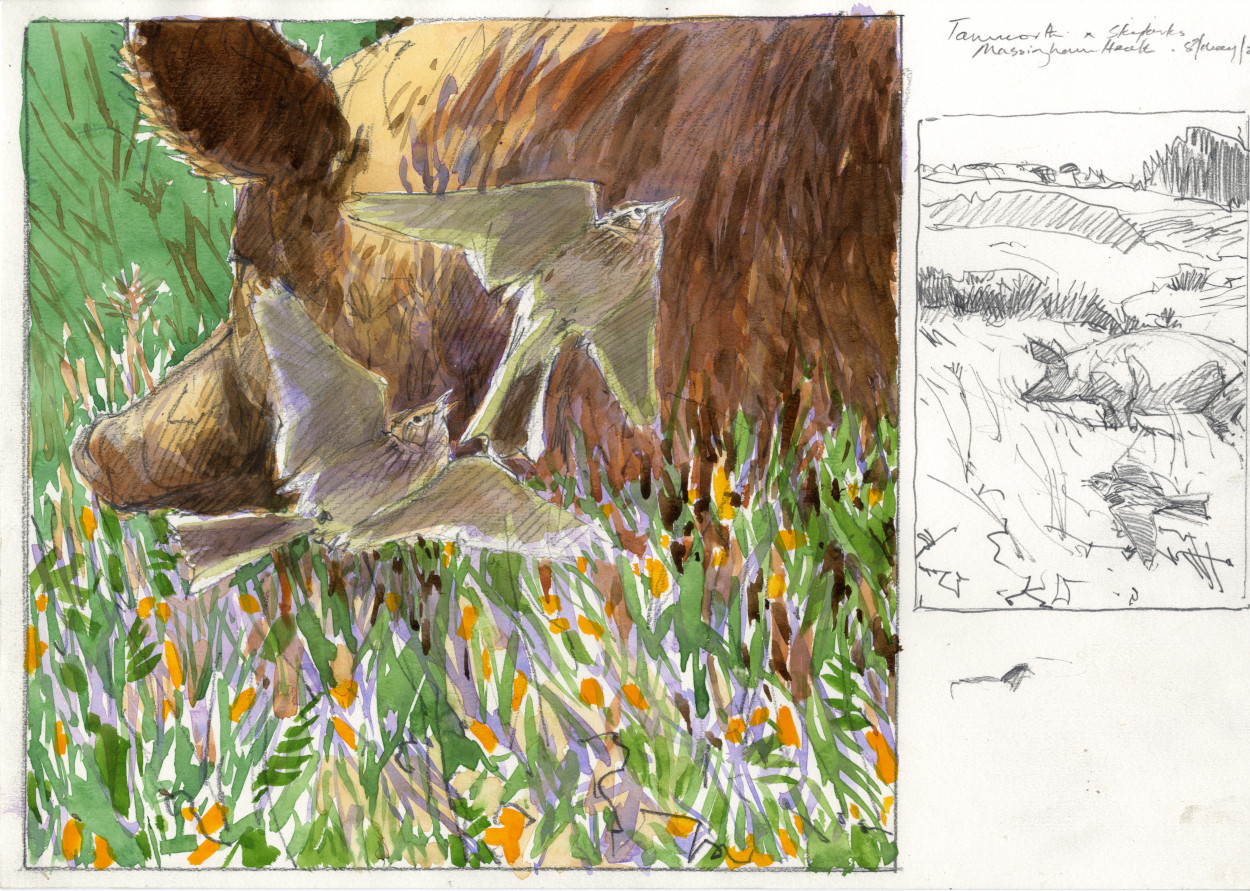
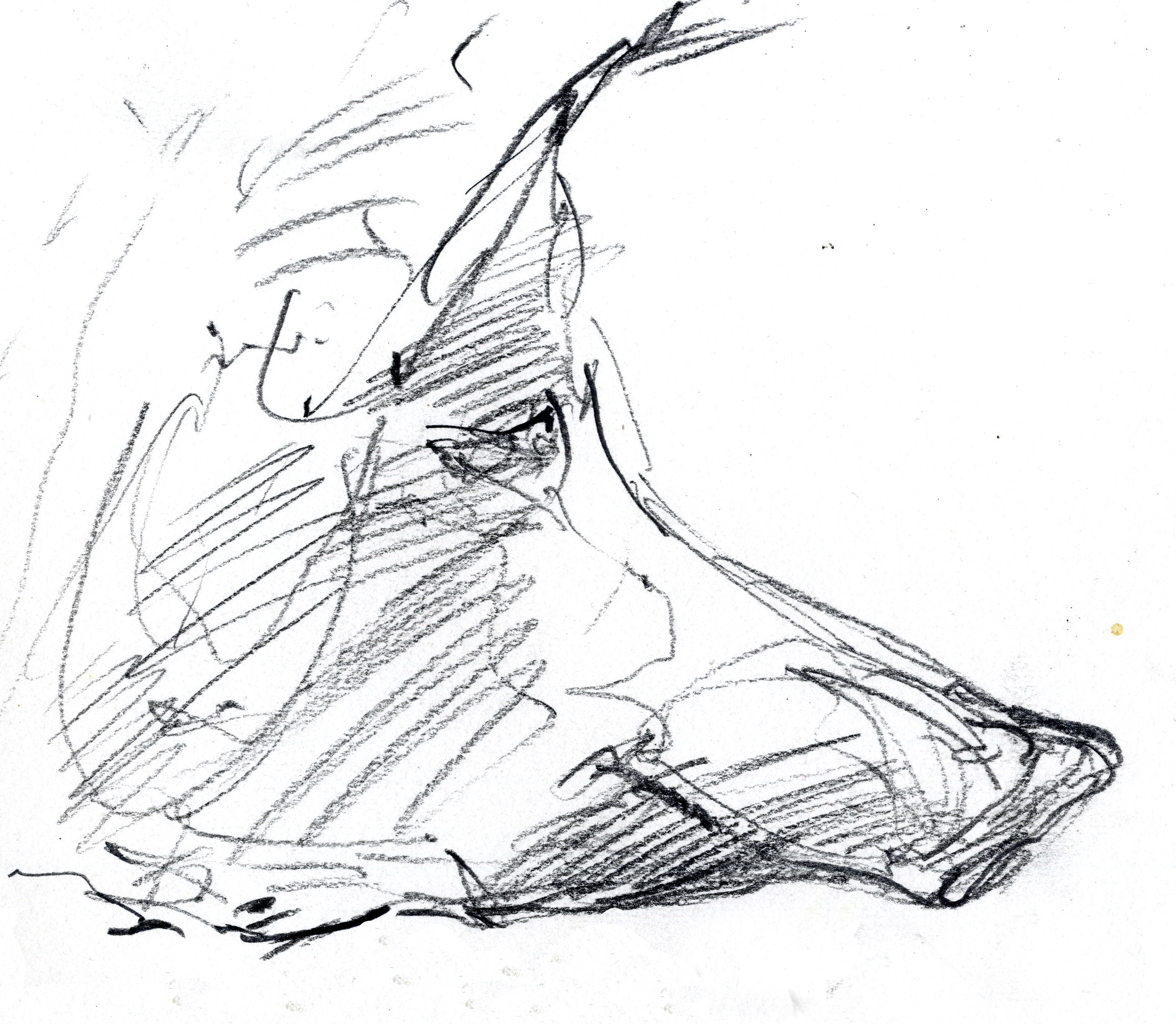
The heath and meadows are at the heart of the SWLA project, but the context of the working farm is an important part of the story. Productive agricultural land is softened by wide field margins and surrounded by species rich hedgerows linking copses and woodland, encouraging natural pest control and reducing the need for pesticides.
The artists residency ended with a fantastic exhibition in the beautiful barn. A huge amount of work was on show — the walls were covered in paintings and drawings, with tables of sketchbooks and several works in clay. More than 200 people who found their way up the track to the barn saw the display.
This second residency should be equally as exciting!
© Bruce Pearson 2026. All rights reserved